HomeEventsVegetarian DirectoryVeggie ChallengeFood FairResources
EnvironmentHealthAnimalsCuisineCulture

 TVA Logo

to become a memberDonate Now

Latest Culture Updates

Vegetarian Directory
Restaurants
Cafes
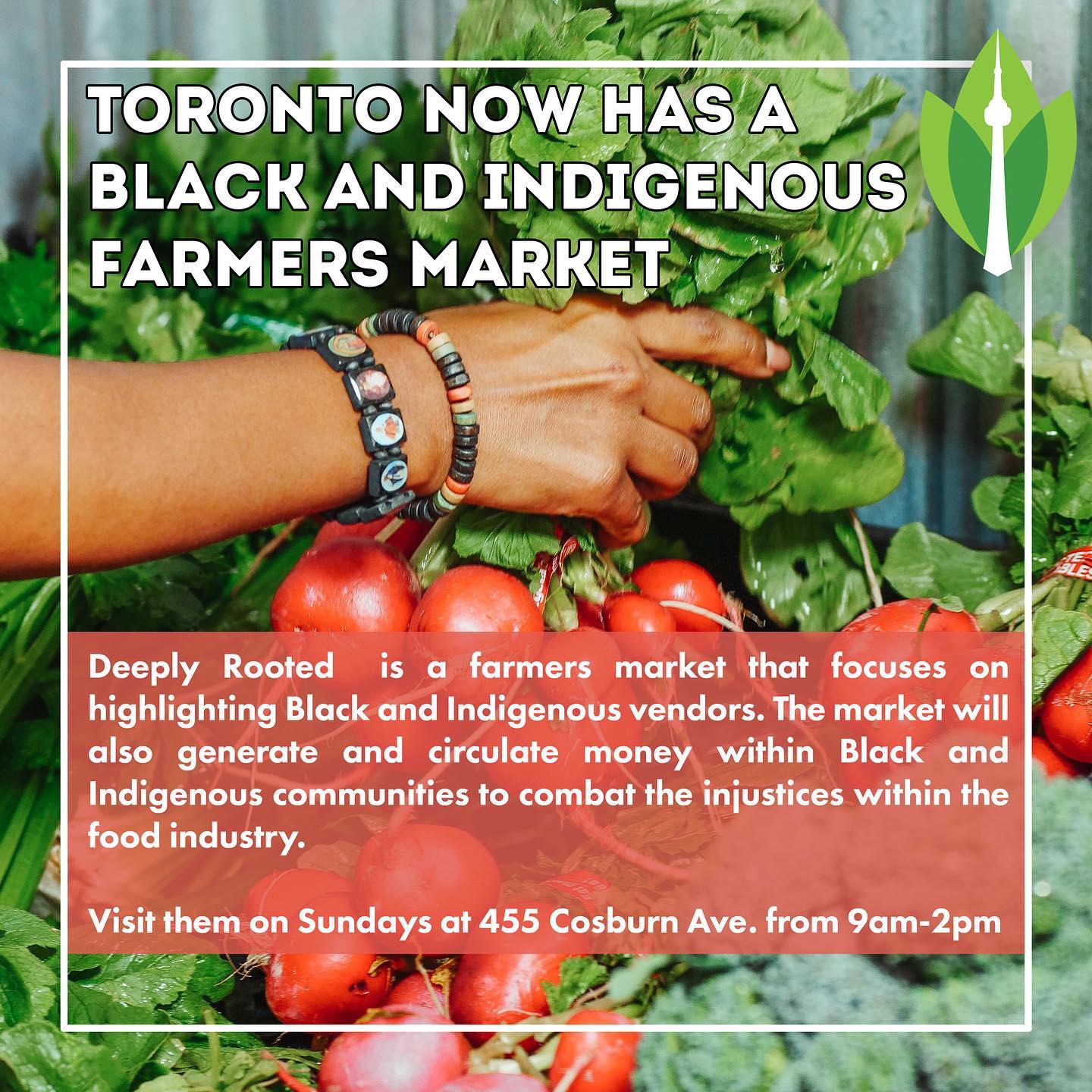
Farmers’ markets
Cooki
ng classes
Vacations

& much more

[Our vegetarian nutrition page -- protein, iron, calcium, D, iodine, omega-3, zine, B12.]
Food & the Environment

Vegetarian phrases in world languages

The International Vegetarian Union has several pages with translated phrases for vegetarian and vegan travelers. Also included are sound files for French, Italian, Japanese, Mandarin, and a few other languages.

Ontario Vegetarian Food Bank partnership

image: Canned Tomatoes

We are currently accepting non-perishable food items at our Resource Centre.

 The Meatrix

A mix of humor, pop culture references, and an important message on factory farming.

3:47 min Flash animation

Looking for a vegetarian roommate or job?

Current postings for housing, jobs, and personal ads in Toronto, Montreal, Ottawa and Vancouver.

Family, friends, and social situations

Like any lifestyle change, your decision to begin eating a healthier diet may lead to some difficult or uncomfortable situations. Learning how to explain your dietary choice to others in a non-confrontational manner will help other people in your life adapt to your new eating habits. See our Diplomacy page.

Donald Watson
Tuesday, 20 December 2005
Donald Watson

Donald Watson, founder of The Vegan Society in 1944 (with Elsie Shrigley) and inventor of the word "vegan", passed away on Nov. 16 at the age of 95. Watson had not eaten meat for 80 years and had been vegan for over 60 years. He celebrated his birthday last year by climbing a mountain. Two years ago he said, echoing George Bernard Shaw's forecast for his own funeral, "there'll be the spirits of all the animals I've never eaten."

Donald Watson (1910-2005)

Excerpts from interviews

The following questions are excerpted from an interview with Donald Watson conducted August 11, 2004 by Vegetarians in Paradise. There are also some questions excerpted from an Interview (can also be viewied as a pdf) by Vegan Society Trustee George D. Rodger, on December 15, 2002. These are prefaced with "VS:"

Question: What events in your life led you to vegetarianism? What brought you to veganism?

Watson: As a child seeing animals pushed through doors alongside butchers' shops to be killed. I once saw a cow and a calf enter together. I wondered later which one the butcher killed first. On one occasion I actually watched a cow being killed at an abattoir in a field where local children were free to watch and where they hoped to be given a bladder to use as a football. I also watched a pig being killed when I visited an uncle's farm. I turned vegetarian [as a New Year Resolution in 1924] at the age of fourteen.

My conversion to veganism was about eighteen years later when I learned about the biological mechanics of milk production.

Coining the term “Vegan”

We understand that you are responsible for creating the word "vegan." How did that occur? Why did you feel the word was needed?

I invited my early readers to suggest a more concise word to replace "non-dairy vegetarian." Some bizarre suggestions were made like "dairyban, vitan, benevore, sanivore, beaumangeur", et cetera. I settled for my own word, "vegan", containing the first three and last two letters of "vegetarian" -- "the beginning and end of vegetarian." The word was accepted by the Oxford English Dictionary and no one has tried to improve it.

There is some confusion about the pronunciation of the word vegan. One of the dictionaries pronounces it vai-gan. Could you give us the correct pronunciation?

The pronunciation is "VEEGAN" not "VAI-GAN," "VEGGAN." or "VEEJAN." The stress is on the first syllable.

On the Vegan Society

You were instrumental in the formation of the Vegan Society. Can you tell us about how that transpired? How have the goals of the group changed over the years?

Inspired people can do much individually, but can do more with like-minded people. So I gathered a few such people together whom I knew would not waste time arguing for the sake of it. I know as a propagandist that many people do not argue to reach right conclusions but to defend their interests and religious shibboleths. We did not need a committee of such people. Of course, we did not always agree on everything. We argued for a long time about whether members should sign a pledge, before deciding against it. We also debated for a long time about the case of honey but again decided against it.

The Society soon widened its aim to include all animal exploitation, in brief to work for a new relationship with the rest of sentient creation in a symbiotic relationship if possible, to "live and HELP live" rather than to just "live and let live."

What are some of the notable accomplishments of the Vegan Society?

Constant growth worldwide. Silencing critics by outliving them! Turning critics into supporters. Governments and health authorities are now doing much of our work for us by advocating a vegan diet for seriously ill patients.

On November 1, vegans worldwide will be celebrating World Vegan Day. This year marks the 60th anniversary of the Vegan Society. Why was November 1 chosen as the day for that event?

When the Vegan Society Council suggested having a World Vegan Day, they suggested it should be my birthday, September 2. I reminded them that the Society was not formed on my birthday in 1910, but on a day in November thirty-four years later. I suggested any day in November would be more appropriate, so they chose November 1. I doubt if they realized that in the Christian calendar this is All Saints' Day!

On longevity and health

According to some scientific studies, vegetarians live longer than non-vegetarians. What factors do you think contributed to your longevity?

Certainly not inheriting a cast-iron constitution. My father died of a coronary at sixty-three. Neither his father nor grandfather reached seventy despite the fact that, as farmers, they had plenty of fresh air, exercise, and organic foods. On my mother's side, all died around the age of seventy.

Early in life I decided my first rule of health must be to try to keep poisons out of my body, and this seems to have paid off. Today we have the new hazard of hundreds of chemicals added to manufactured foods, so we must read the small print if we want to keep clear of them. A fuller answer to this question would fill a book.

VS: You are 92 years and 104 days old as of today. To what do you attribute your long life?

I married a Welsh girl, who taught me a Welsh saying, "When everyone runs, stand still", and I seem to have been doing that ever since. That must be part of the answer, because so many people are running towards what I see as suicide, performing habits that everyone knows are dangerous. I've always accepted that Man's greatest mistake is trying to turn himself into a carnivore, contrary to natural law. Inevitably, I suppose, within the next ten years one morning I won't wake up. What then? There'll be a funeral, there'll be a smattering of people at it and, as Shaw forecast for his own funeral, there'll be the spirits of all the animals I've never eaten. In that case, it will be a big funeral!

On being vegan

In your lifetime what negative words and actions have you faced because of your vegan views?

None, except in the early stages. People now are careful not to argue with vegans!

What advice would you offer to people about making the transitions to vegetarianism and to veganism?

Don't leave it too late. A single meal of animal food may infect you with any of the many diseases now endemic in medicated farm animals, including variant CJD (Creutzfeld Jacob Disease) from which there is no cure and which may lie dormant for many years.

VS: How does your veganism relate to any religious beliefs you may have?

I never had very deep ones. I've never been clever enough to be an atheist - an agnostic, yes. Some theologians think that Christ was an Essene. If he was, he was a vegan. If he were alive today, he'd be an itinerant vegan propagandist instead of an itinerant preacher of those days, spreading the message of compassion. I understand that there are now more vegans sitting down to Sunday lunch than there are Anglicans attending Sunday morning service. I think that Anglicans should rejoice at the good news that somebody at least is practising the essential element in the Christian religion – compassion.

VS: What do you find most difficult about being vegan?

Well, I suppose it is the social aspect – excommunicating myself from that part of life where people meet to eat. The only way this problem can be eased is by veganism becoming more and more acceptable in guest houses, hotels, wherever one goes, until one hopes one day it will become the norm.

VS: And the other side of the coin: what do you find easiest about being vegan?

The great advantage of having a clear conscience and believing that scientists must now accept conscience as part of the scientific equation.

VS: Do you have any message for the millions of people who are now vegan?

Take the broad view of what veganism stands for – something beyond finding a new alternative to scrambled eggs on toast or a new recipe for Christmas cake. Realize that you're on to something really big, something that hadn't been tried until sixty years ago, and something which is meeting every reasonable criticism that anyone can level against it. And this doesn't involve weeks or months of studying diet charts or reading books by so called experts - it means grasping a few simple facts and applying them.

On life

What organizations do you belong to and support?

For me veganism covers many, but I do support movements with isolated aims providing they do not use vivisection. I have a soft spot for the Royal National Lifeboat Institution and for Mountain Rescue teams, where people risk their lives to save others, without payment.

Of all of your personal accomplishments, which ones give you the most pride and satisfaction?

Being instrumental in starting the vegan movement and giving it its name.

Living healthily.

Teaching more than 3,000 boys over forty-three years the joy of making things in wood.

Being a hedonist, providing I do not harm myself, other people, or animals, or the planet.

Never quarrelling with people, because early in life I became adept at raising my eyebrows instead at the strange behaviour of so many. The fact that they are still in place says a lot for the reflex action of the muscles on my forehead!

My biggest achievement is still to come. It is to die peacefully in sleep when my body is worn out.

VS: What are your views on direct action?

I've never become involved in it. I respect the people enormously who do it, believing that it's the most direct and quick way to achieve their ends. If I were an animal in a vivisection cage, I would thank the person who broke in and let me out but, having said that, we must always remember: is it just possible that our act could be counterproductive? I'd rather not say "yes" or "no" because I don't know the answer to that.

VS: What do you consider the greatest achievement in your life?

Achieving what I set out to do: to feel that I was instrumental in starting a great new movement which could not only change the course of things for Humanity and the rest of Creation but alter Man's expectation of surviving for much longer on this planet.

Have we overlooked anything that you would like to share with our readers?

Yes, veganism gives us all the opportunity to say what we "stand for" in life. The ideal of healthy, humane living is now easy with modern transport bringing us vegan foods from all over the world. Join us and add decades of health to your life, with a clear conscience as a bonus.